

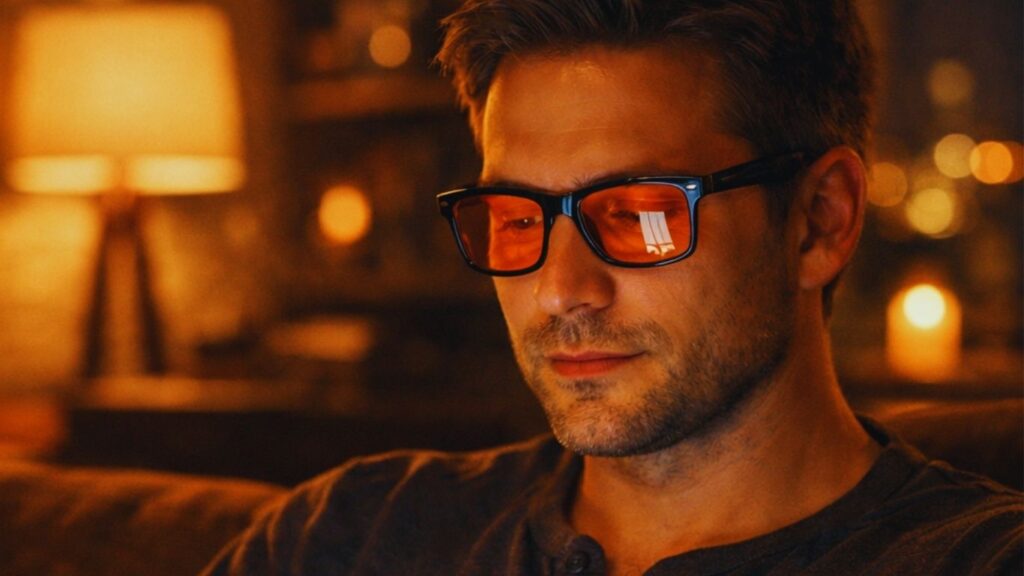
How to Use Blue Light Biohacking for Improved Sleep and Recovery
Let’s be honest: your 11 PM scrolling session isn’t just a waste of time—it’s actively disrupting your brain chemistry. In today’s hustle culture, we’ve been led to believe that sleep is a luxury, but biohacking reveals otherwise. Each time blue light from your devices hits your eyes late at night, your brain interprets it as sunrise, which stops melatonin production almost immediately. The outcome? You wake up feeling groggy, reaching for caffeine just to get through the day. But what if you could “trick” your body into achieving deep, restorative sleep without sacrificing your devices? Welcome to the world of Blue Light Biohacking.
The Science: Why Blue Light Biohacking is Crucial for Modern Humans
To grasp why we need to manage our light exposure, we must consider our evolutionary biology. For millions of years, the only source of “blue light” for humans was the sun.
The Master Clock : Deep within your brain is the Suprachiasmatic Nucleus, functioning as the “Master Clock,” regulating when you feel awake and when you’re ready to rest.
Melatonin Suppression: Studies indicate that blue light (wavelengths between 400-490nm) is the most significant suppressor of melatonin—the hormone responsible for signaling your body to repair itself overnight. Harvard Health points out that blue light can have negative effects, increasing risks for obesity and heart disease.
The Cortisol Spike: Checking your phone at 1 AM triggers a cortisol release, signaling to your body that it’s time to be alert. This leads to a “circadian mismatch,” leaving you drained yet wired.
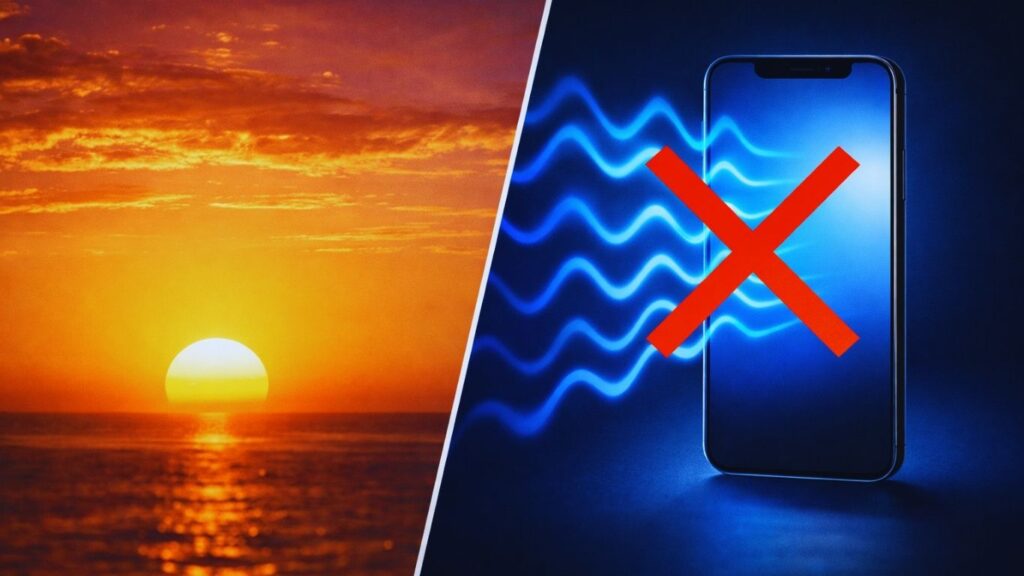
Tactical Steps: How to Start Blue Light Biohacking Today
1. The Sunset Rule Once the sun sets, it’s time to change your home environment. Turn off the bright overhead LED lights. Warm Lighting: Opt for salt lamps or light bulbs with a warm tone (2700K or lower). The Candlelight Hack: Spend the last hour of your day surrounded by candlelight. This signals to your ancient genes that the day has ended.
2. Strategic Gear: Blue Light Blocking Glasses Not all “computer glasses” are made equal. For effective blue light biohacking, you need the right gear.
Daytime Lenses: Choose clear lenses that block 30-50% of blue light to help alleviate eye strain. Nighttime Lenses: These should be orange or red and block 100% of the 450-550nm spectrum. Expert Reference: According to the Mayo Clinic, digital eye strain is increasingly common, and managing light exposure is a crucial solution.

3. Software Optimization: You don’t always have to set your phone aside, but it’s important to adjust how it interacts with your eyes.
Night Shift/Night Mode: Configure your phone to automatically transition to a warmer tone at sunset. f.lux for Desktop: This free software modifies your screen’s color temperature based on your local latitude.
Grayscale Mode: Switching your screen to black-and-white minimizes the “dopamine hit” and overall light intensity.
Advanced Biohacking: Optimizing Your Circadian Rhythm While blocking light at night is essential, getting adequate light during the day is equally important—this creates the “Light-Dark Cycle.”
Morning Sunlight: Aim for 10-15 minutes of direct sunlight within 30 minutes of waking up. This helps synchronize your internal clock so melatonin is released properly 14 hours later. As noted by the CDC, timely exposure to light is a powerful tool for regulating circadian rhythms.
- This strategy works best when combined with a solid Morning Biohacking : routine, which serves as the ‘anchor’ for your entire day. To protect your eyes and ensure your sleep cycle stays on track, I highly recommend using these
- Blue Light Blocking Glasses, which have been a game-changer for my own nighttime recovery